


Cold leads can quickly drain a sales team’s energy when contact details are outdated or prospects simply never respond. For sales and marketing professionals in mid-sized B2B tech firms across the Netherlands, verifying lead quality is the linchpin for outreach success. This article shows practical strategies for lead verification that help you focus on the contacts most likely to convert and make your campaign efforts count.
Table of Contents
- What Verifying B2B Leads Really Means
- Types of B2B Leads and Their Relevance
- Effective Methods for Lead Verification
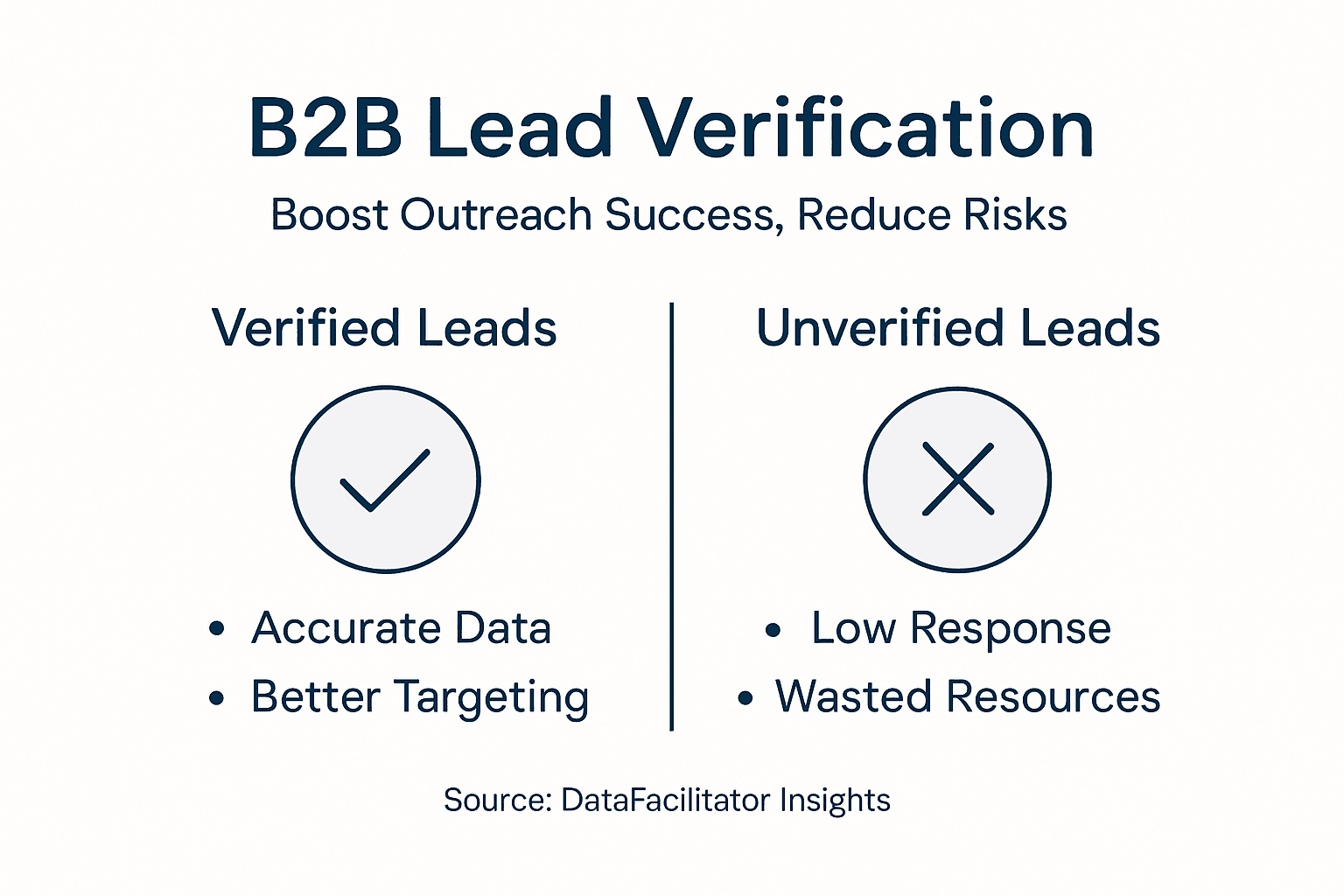
- Risks of Using Unverified B2B Leads
- Integrating Lead Verification Into Sales Workflows
Key Takeaways
| Point | Details |
|---|---|
| Lead Verification is Essential | Systematic confirmation of lead data enhances sales outreach effectiveness and reduces the risk of low-quality leads. |
| Automated and Manual Methods are Key | Combining automated verification tools with manual checks ensures higher accuracy and reliability in lead qualification. |
| Integrate Verification into Workflows | Streamlining lead verification within CRM systems boosts productivity and data integrity, leading to better sales outcomes. |
| Unverified Leads Are Risky | Failing to verify leads can result in wasted resources, diminished brand credibility, and decreased conversion rates. |
What Verifying B2B Leads Really Means
Lead verification represents a critical strategic process for B2B sales teams seeking to optimize their outreach effectiveness. At its core, lead verification involves systematically confirming the accuracy and relevance of potential business contacts before initiating sales engagement.
The verification process encompasses several key validation techniques designed to ensure lead quality and potential conversion potential:
-
Contact Information Validation
- Confirming email addresses are active and deliverable
- Verifying phone numbers are current and functional
- Checking company website and social media profiles exist
-
Relevance Assessment
- Matching leads against predefined Ideal Customer Profile (ICP)
- Evaluating company size, industry, and geographic parameters
- Determining potential alignment with product/service offerings
Successful B2B lead verification goes beyond simple data collection. It requires a sophisticated approach that transforms raw contact information into actionable sales intelligence. Companies must develop robust verification frameworks that integrate multiple data validation methods to filter out low-quality or irrelevant leads.
Key Verification Methods:
- Automated data verification tools
- Manual cross-referencing with multiple sources
- Regular database cleaning and updates
- Ongoing lead scoring and segmentation
Pro tip: Invest in comprehensive data verification processes that prioritize quality over quantity to maximize your sales team’s efficiency and conversion potential.
Types of B2B Leads and Their Relevance
B2B sales leads are diverse, representing potential business customers at various stages of engagement and purchasing readiness. Lead classifications can be strategically mapped to help sales teams prioritize and customize their outreach efforts effectively.
The primary categories of B2B leads include:
Here is a comparison of how different B2B lead types impact your sales prioritization:
| Lead Type | Typical Sales Approach | Expected Conversion Speed |
|---|---|---|
| Cold Lead | Nurturing/education | Slow, requires persistence |
| Warm Lead | Personalized follow-up | Moderate, quicker than cold |
| Hot Lead | Direct sales engagement | Fast, high closing likelihood |
-
Cold Leads
- Minimal prior interaction with the company
- No demonstrated interest in products/services
- Require extensive initial engagement
-
Warm Leads
- Showed some initial interest or engagement
- Potential alignment with company offerings
- More receptive to targeted communication
-
Hot Leads
- High purchase intent
- Active research and consideration stage
- Ready for direct sales conversations
Machine learning-based lead scoring models have transformed how businesses evaluate and prioritize leads. These advanced systems analyze multiple data points to identify the most promising prospects, enabling more efficient resource allocation and targeted marketing strategies.
Key Lead Qualification Criteria:
- Decision-making authority
- Budget availability
- Urgent business needs
- Potential for long-term partnership
- Alignment with ideal customer profile
Pro tip: Develop a dynamic lead classification system that allows continuous refinement of lead categorization based on real-time interaction and engagement data.
Effective Methods for Lead Verification
Effective B2B lead verification requires a multi-layered approach that combines technological sophistication with strategic data analysis. Automated verification systems employing advanced algorithms can dramatically improve the accuracy and efficiency of lead qualification processes.
Key lead verification methods include:
-
Direct Contact Verification
- Phone number validation
- Email address confirmation
- Direct communication with company representatives
- Cross-referencing provided contact information
-
Digital Verification Techniques
- Social media profile authentication
- Company website validation
- LinkedIn profile cross-checking
- Online business directory verification
-
Advanced Data Validation
- Machine learning data pattern recognition
- Artificial intelligence-powered lead scoring
- Real-time database cross-referencing
- Fraud detection algorithms
Third-party verification services offer comprehensive approaches to confirming lead authenticity. These systems utilize sophisticated cross-checking mechanisms that validate information against multiple independent sources, reducing the risk of incorrect or fraudulent lead data.
Verification Process Steps:
- Initial data collection
- Automated preliminary screening
- Cross-reference verification
- Manual validation checks
- Final lead qualification
Pro tip: Implement a dynamic verification workflow that combines automated tools with human oversight to maximize lead data accuracy and reliability.

Risks of Using Unverified B2B Leads
Unverified B2B leads can pose significant threats to an organization’s sales strategy and overall business performance. Unverified vendors dramatically increase potential business risks, creating multiple potential vulnerabilities that can undermine sales efforts and organizational credibility.
The primary risks associated with unverified B2B leads include:
-
Financial Risks
- Wasted marketing and sales expenditure
- Potential revenue loss from invalid contacts
- Inefficient resource allocation
- Reduced return on investment (ROI)
-
Operational Challenges
- Inaccurate customer targeting
- Decreased sales team productivity
- Increased time spent on low-quality leads
- Disrupted sales pipeline management
-
Reputational Damages
- Diminished brand credibility
- Potential compliance violations
- Reduced trust from potential customers
- Negative perception of sales processes
Unverified leads can create a cascading effect of business complications. Inaccurate contact information, non-existent businesses, or outdated company details can lead to substantial time and resource waste, ultimately undermining the entire sales outreach strategy.
Potential Consequences of Unverified Leads:
- Decreased conversion rates
- Higher customer acquisition costs
- Compromised data integrity
- Potential legal and regulatory risks
- Reduced overall sales team morale
Pro tip: Develop a rigorous lead verification protocol that integrates automated screening with human validation to minimize risks and maximize lead quality.
Integrating Lead Verification Into Sales Workflows
Integrating lead verification processes directly into sales workflows transforms how organizations manage and prioritize potential business opportunities. Successful integration requires a strategic approach that aligns technological capabilities with sales team objectives.
Key integration strategies include:
-
CRM System Integration
- Real-time data validation
- Automatic lead scoring
- Instant contact information verification
- Seamless data synchronization
-
Workflow Automation
- Automated lead filtering
- Prioritization based on verification results
- Reduced manual data entry
- Consistent lead qualification process
-
Data Quality Management
- Continuous lead data cleaning
- Removal of invalid or duplicate contacts
- Maintaining accurate prospect databases
- Enhancing overall data integrity
Automated validation techniques help sales teams efficiently filter out low-quality leads before they consume valuable resources. By implementing robust verification protocols, organizations can dramatically improve their sales pipeline efficiency and conversion potential.
The following table highlights benefits of integrating lead verification into your CRM workflows:
| Integration Benefit | Sales Team Impact | Data Management Outcome |
|---|---|---|
| Real-time data validation | Immediate lead accuracy | Reduced entry errors |
| Automated lead scoring | Better opportunity ranking | Improved segmentation |
| Seamless synchronization | Smoother workflow adoption | Up-to-date contact records |
| Continuous cleaning | Less manual review needed | Higher overall database quality |
Implementation Steps:
- Select appropriate verification tools
- Configure CRM integration
- Establish validation rules
- Train sales team on new processes
- Monitor and refine verification workflow
Pro tip: Create a cross-functional team combining sales, marketing, and data management professionals to design and implement a comprehensive lead verification strategy.
Boost Your Outreach Success with Verified B2B Leads from DataFacilitator
The challenge of verifying B2B leads to ensure accurate targeting and maximize sales efficiency is critical for any outbound sales team. This article highlights the importance of confirmation processes like contact information validation and lead relevance assessment. If you are struggling with wasted resources, low conversion rates, or unreliable data, understanding the risks of unverified leads is key to transforming your sales pipeline.
DataFacilitator specializes in delivering highly targeted and validated B2B contact lists tailored to precise countries, regions, and industries. Our transparent verification through screen recordings and pay-per-result model guarantees you only pay for authentic, actionable leads that align with your Ideal Customer Profile. Visit We handle the leads, you close the deals. – DataFacilitator to experience data-driven growth that saves time and boosts closure rates.
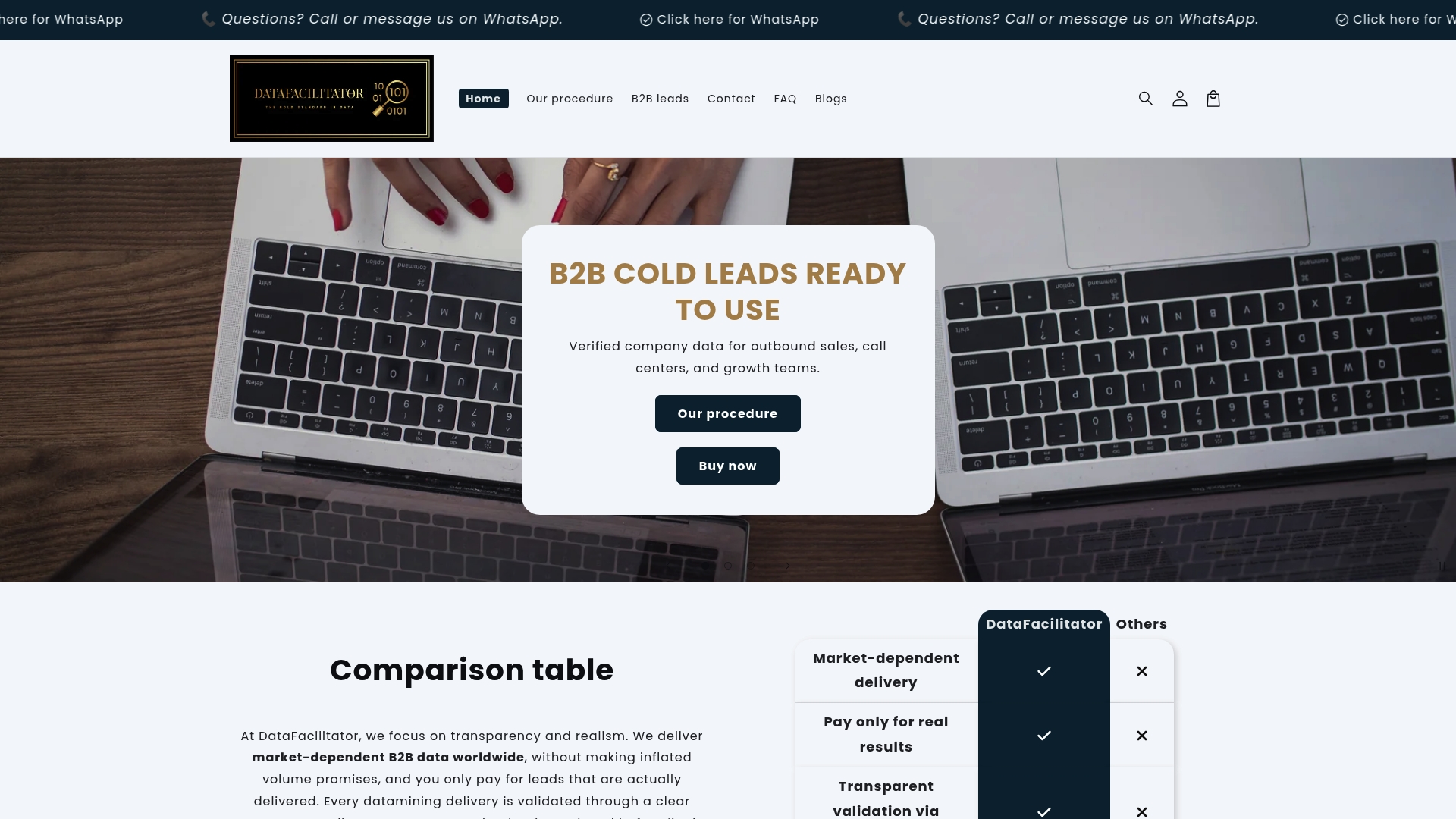
Take control of your sales outcomes by integrating verified leads into your outreach strategy today. Explore how our compliant, segmented datasets empower marketing and sales teams to prioritize efforts and increase conversion speed. Get started now at DataFacilitator.com and see the difference in your B2B prospecting success.
Frequently Asked Questions
What is lead verification in B2B sales?
Lead verification in B2B sales is the process of confirming the accuracy and relevance of potential business contacts before engaging them in sales efforts. It includes validating contact information and assessing the leads against an Ideal Customer Profile (ICP).
Why is verifying B2B leads important for sales teams?
Verifying B2B leads is crucial as it ensures that sales teams focus their efforts on high-quality, relevant leads, thereby improving outreach effectiveness, increasing conversion rates, and optimizing resource allocation.
What methods are commonly used for verifying B2B leads?
Common methods for verifying B2B leads include automated data verification tools, manual cross-referencing with multiple sources, direct contact verification, and advanced techniques such as machine learning data pattern recognition and artificial intelligence-powered lead scoring.
What are the risks of using unverified B2B leads?
Using unverified B2B leads can lead to significant financial risks, operational challenges, and reputational damages. It may result in wasted marketing efforts, decreased sales productivity, and a negative impact on the overall sales pipeline management.