


Struggling to turn raw contact lists into valuable business relationships is a common challenge for sales professionals across the Netherlands. Defining your ideal customer and segmenting B2B data are foundation steps for successful cold outreach and lead generation. This guide reveals a practical approach—rooted in comprehensive research and data validation—that empowers you to boost accuracy, enhance targeting, and drive conversion with every campaign.
Table of Contents
- Step 1: Define Your Ideal Target Audience Precisely
- Step 2: Gather And Segment Targeted B2B Data Effectively
- Step 3: Verify And Validate Contact Information For Accuracy
- Step 4: Craft Personalized Outreach Strategies Using Data Insights
- Step 5: Track Outcomes And Optimize For Higher Lead Quality
Quick Summary
| Key Point | Explanation |
|---|---|
| 1. Define your target audience precisely | Comprehensive research helps pinpoint customer profiles for effective marketing and sales strategies. |
| 2. Gather and segment targeted B2B data effectively | Collecting and strategically segmenting data reveals genuine business opportunities and enhances targeting. |
| 3. Verify and validate contact information for accuracy | Regularly ensuring that contact data is accurate is essential for successful lead generation and outreach. |
| 4. Craft personalized outreach strategies using data insights | Utilizing detailed data insights enables the creation of tailored communication that resonates with potential clients. |
| 5. Track outcomes and optimize for higher lead quality | Implementing robust tracking mechanisms improves understanding of lead quality and enhances conversion potential. |
Step 1: Define your ideal target audience precisely
Defining your target audience is crucial for creating effective B2B lead generation strategies. In this step, you’ll learn how to pinpoint the exact customer profile that will maximize your marketing efforts and sales potential.
Successful audience segmentation starts with comprehensive research. Marketing experts recommend breaking down your ideal customer into specific, measurable characteristics. Focus on these key dimensions:
-
Company demographics
- Industry sector
- Company size
- Annual revenue
- Geographic location
-
Decision-maker profiles
- Job titles
- Professional responsibilities
- Pain points
- Technology adoption level
-
Behavioral characteristics
- Purchase history
- Previous engagement with similar solutions
- Communication preferences
- Budget allocation patterns
To develop a precise audience profile, conduct interviews with existing customers, analyze your current client base, and leverage market research data. Map out detailed buyer personas that go beyond surface-level demographics. Your goal is to understand not just who they are, but what drives their business decisions.
A well-defined target audience transforms generic marketing into laser-focused communication that resonates directly with potential buyers.
Consider creating a comprehensive spreadsheet that tracks all these dimensions, allowing you to continuously refine your understanding of your ideal customer. Cross-reference multiple data sources to ensure accuracy and depth in your profile.
Pro tip: Revisit and update your target audience profile quarterly to adapt to changing market dynamics and emerging business trends.
Step 2: Gather and segment targeted B2B data effectively
Successful B2B lead generation depends on your ability to collect and strategically segment data that reveals genuine business opportunities. In this step, you’ll transform raw contact information into a powerful targeting resource.
Market segmentation strategies allow businesses to break down complex markets into actionable groups. Focus on collecting data across multiple dimensions that provide meaningful insights:
-
Demographic Information
- Company size
- Industry classification
- Annual revenue
- Geographic location
- Number of employees
-
Behavioral Signals
- Purchase history
- Technology stack
- Previous vendor interactions
- Digital engagement metrics
- Content consumption patterns
-
Decision-Maker Characteristics
- Job title
- Professional responsibilities
- Reported business challenges
- Communication preferences
- Potential buying authority
To develop a robust segmentation approach, combine multiple data sources. Leverage professional networks, industry databases, company websites, and direct outreach to build comprehensive profiles. Cross-reference information from different channels to ensure accuracy and depth.
Effective B2B segmentation transforms generic contact lists into targeted, high-conversion prospect pools.
Utilize advanced data enrichment techniques to fill gaps in your existing information. Consider investing in professional data services that provide verified, up-to-date contact details and company insights. Regularly update your segments to maintain data relevance and accuracy.

Pro tip: Implement a quarterly data validation process to remove outdated contacts and refresh your segmentation strategy with the most current business intelligence.
Step 3: Verify and validate contact information for accuracy
Ensuring the reliability of your B2B contact database is critical for successful lead generation. In this step, you’ll learn how to systematically validate and maintain the accuracy of your contact information.
B2B contact data accuracy is essential for maintaining effective sales and marketing strategies. Nearly 30% of CRM data becomes outdated annually, which can significantly impact your outreach efforts.
Implement a comprehensive validation strategy using these key methods:
-
Direct Verification Techniques
- Phone number confirmation calls
- Email bounce-back checks
- LinkedIn profile cross-referencing
- Direct company website validation
-
Automated Validation Tools
- Email verification services
- CRM data enrichment platforms
- Professional database cross-checking
- Real-time contact information updates
-
Ongoing Maintenance Practices
- Quarterly data hygiene reviews
- Automated duplicate removal
- Tracking job change notifications
- Implementing data decay monitoring
Establish a systematic approach to data validation that goes beyond simple collection. Create a standardized process for regularly reviewing and updating contact information. This means not just collecting data, but actively maintaining its integrity through consistent verification methods.
Accurate contact data is the foundation of successful B2B lead generation strategies.
Utilize a combination of manual verification and automated tools to ensure the highest level of data accuracy. Invest time in building a robust validation process that minimizes errors and maximizes the potential of your contact database.
Here’s a quick comparison of manual vs. automated B2B contact validation methods:
| Validation Method | Speed | Accuracy | Best Use Case |
|---|---|---|---|
| Manual Verification | Slow | Very High | Small, high-value datasets |
| Automated Tools | Very Fast | High, depends on source | Large-scale ongoing updates |
| Hybrid Approach | Moderate | Maximum | Continuous database hygiene |
Pro tip: Create an automated workflow that flags and prompts review for contacts that haven’t been verified in the past six months to maintain ongoing data quality.
Step 4: Craft personalized outreach strategies using data insights
Transforming raw data into targeted communication is the key to successful B2B lead generation. In this step, you’ll learn how to convert your meticulously collected contact information into compelling, personalized outreach strategies.
B2B lead generation strategies require a nuanced approach that goes beyond generic communication. Your data insights will become the foundation for creating meaningful connections with potential clients.
Develop your personalization strategy using these critical dimensions:
-
Demographic Personalization
- Industry-specific pain points
- Company size relevance
- Role-specific challenges
- Geographic market dynamics
-
Behavioral Targeting
- Previous interaction history
- Content engagement patterns
- Technology adoption levels
- Purchase intent signals
-
Communication Customization
- Tailored messaging frameworks
- Channel preference mapping
- Tone and language alignment
- Contextual value propositions
Create messaging that speaks directly to the specific needs and challenges of each segment. This means moving beyond surface-level personalization to develop communication that demonstrates genuine understanding of the prospect’s business landscape.
Personalization is not about using a contact’s name, but about demonstrating deep insight into their unique business context.
Utilize advanced segmentation techniques to develop multi-layered communication strategies. Break down your target audience into granular subgroups and craft messages that feel like they were written specifically for each individual decision-maker.
Pro tip: Develop a dynamic messaging matrix that allows you to quickly pivot and customize outreach based on real-time data insights and emerging market trends.
Step 5: Track outcomes and optimize for higher lead quality
Successful B2B lead generation requires continuous measurement and strategic refinement. In this step, you’ll learn how to transform raw performance data into actionable insights that dramatically improve your lead quality and conversion potential.
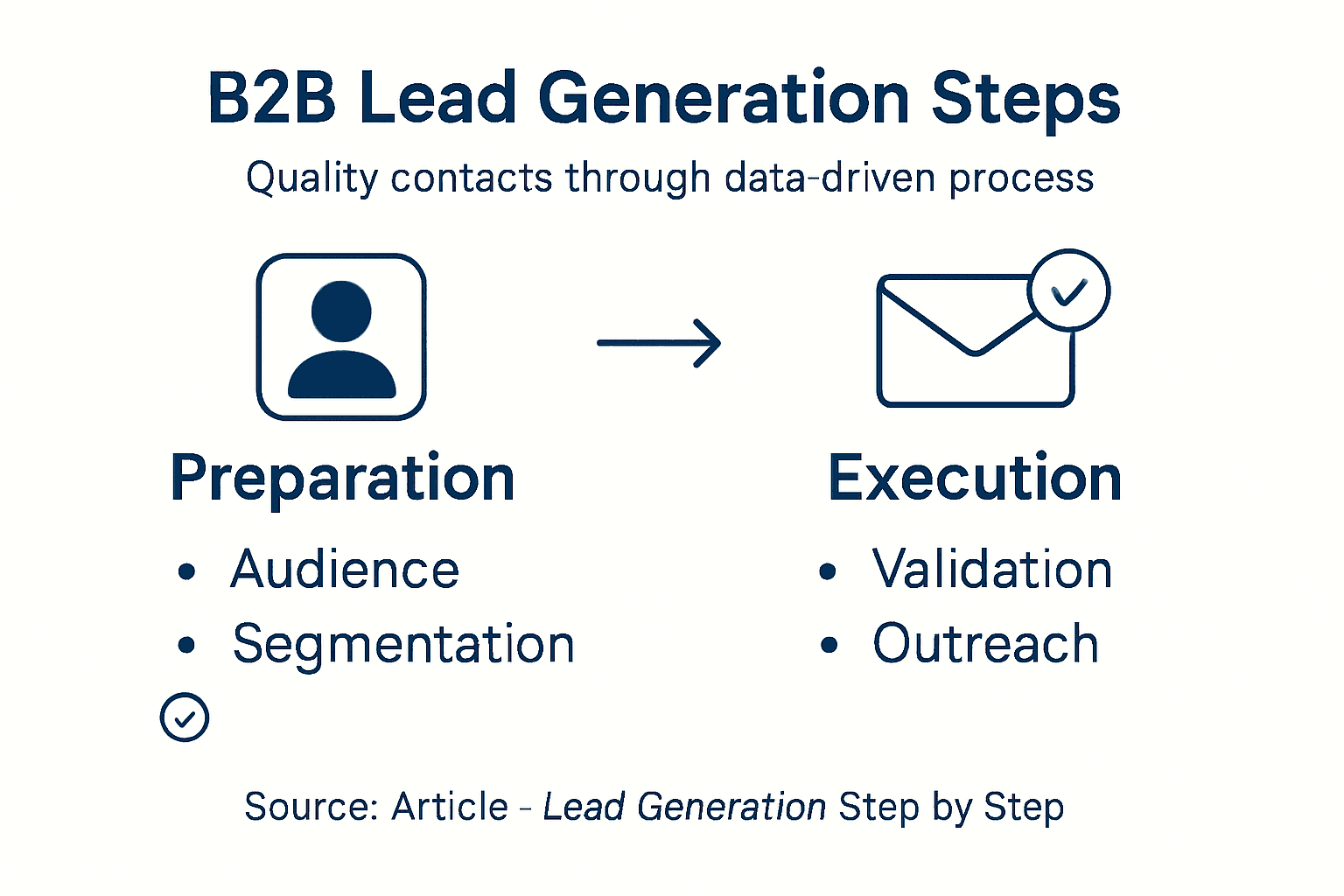
Lead scoring models leverage machine learning to enhance lead identification and qualification. By systematically analyzing your data, you can prioritize high-value prospects and allocate sales resources more efficiently.
Implement a comprehensive tracking framework across these critical dimensions:
-
Volume Metrics
- Total lead generation count
- Lead source performance
- Channel-specific conversion rates
- Cost per lead acquisition
-
Quality Indicators
- Lead engagement scores
- Demographic match rates
- Intent signal strengths
- Behavioral qualification levels
-
Conversion Performance
- Sales pipeline progression
- Opportunity creation rates
- Average deal size
- Sales cycle duration
Develop a robust tracking mechanism that goes beyond surface-level numbers. Use advanced analytics to understand not just how many leads you generate, but their true potential value and likelihood of conversion.
Meaningful lead tracking transforms raw data into strategic intelligence that drives business growth.
Utilize machine learning and predictive analytics to continuously refine your lead scoring methodology. Create dynamic models that adapt to changing market conditions and evolving buyer behaviors.
This summary highlights key metrics to track B2B lead generation effectiveness:
| Metric Type | Example Metric | Business Value |
|---|---|---|
| Volume | Total leads per quarter | Measures campaign reach |
| Quality | Average engagement score | Indicates interest level |
| Conversion | Deal closure rate | Shows true revenue impact |
Pro tip: Implement a quarterly review process that cross-references lead generation metrics with actual sales outcomes to ensure your tracking models remain accurate and predictive.
Unlock High-Quality B2B Leads with Precision and Confidence
Struggling to find accurate and verified contact information that truly aligns with your ideal target audience? The article breaks down essential steps from defining your buyer personas to validating your contact data. Now, take your lead generation further by partnering with We handle the leads, you close the deals. – DataFacilitator. Our Netherlands-based platform specializes in delivering highly targeted, compliant B2B contact lists customized to your specific industry, region, or niche.
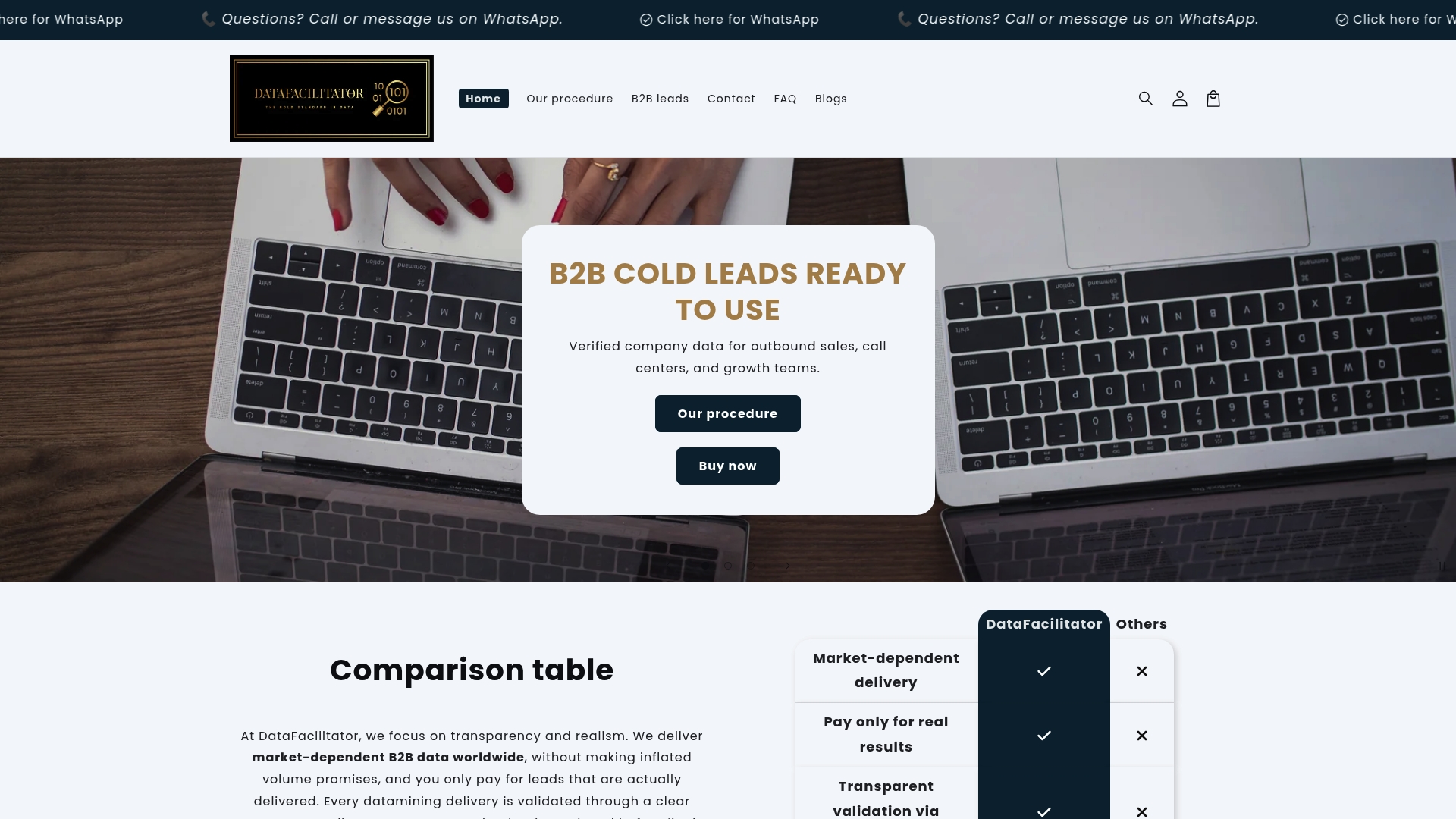
Don’t let outdated or generic data stall your outbound sales success. Access structured datasets with verified emails, phone numbers, and social profiles that empower you to personalize outreach and connect authentically. Explore our offerings at DataFacilitator.com and discover how you can optimize your lead quality today. Begin generating actionable leads with confidence—visit We handle the leads, you close the deals. – DataFacilitator and transform your cold outreach into real growth now.
Frequently Asked Questions
How do I define my ideal target audience for B2B lead generation?
To define your ideal target audience, start by gathering detailed information on company demographics, decision-maker profiles, and behavioral characteristics. Conduct interviews with existing customers and analyze data to create precise buyer personas that focus on what drives their business decisions.
What methods should I use to gather and segment targeted B2B data?
Use a variety of methods to collect B2B data, including professional networks, industry databases, and direct outreach. Segment this data based on demographic, behavioral, and decision-maker characteristics to identify and prioritize genuine business opportunities.
How can I verify and maintain the accuracy of my contact information?
Implement a systematic validation strategy that includes direct verification techniques like phone confirmations and automated tools for real-time updates. Regularly schedule quarterly reviews to ensure your contact information remains current and reliable.
What should I include in my personalized outreach strategies for B2B leads?
In your outreach strategies, focus on demographic personalization, behavioral targeting, and communication customization. Craft messages that address the specific needs of each target segment, demonstrating a deep understanding of their business context.
How can I track the outcomes of my B2B lead generation efforts?
To track your B2B lead generation outcomes, establish a framework that measures volume metrics, quality indicators, and conversion performance. Regularly review these metrics to identify trends and optimize your strategies, aiming for continuous improvement in lead quality and conversions.