


Cold outreach often falls flat when contact information is incomplete or riddled with errors. For B2B sales and marketing professionals in the Netherlands, accurate data is the backbone of successful campaigns. Modern data validation goes beyond simple error checks to actively safeguard the integrity of business records, minimizing wasted effort and protecting lead generation investments. This guide highlights essential validation strategies and practical solutions that help you maintain data quality and build trust with every new prospect.
Table of Contents
- What B2B Data Validation Means Today
- Main Types And Methods Of Validation
- How The Data Validation Process Works
- Why Data Compliance Is Critical In 2026
- Risks Of Poor Data And Common Pitfalls
- Practical Solutions For Reliable Lead Data
Key Takeaways
| Point | Details |
|---|---|
| Importance of B2B Data Validation | Ensuring the accuracy and reliability of business contact information is crucial for effective outreach and decision-making. |
| Ongoing Validation Process | Implementing a continuous validation strategy helps maintain high data quality and prevent costly errors. |
| Technological Integration | Employing advanced tools and automated checks enhances data verification efficiency and reliability. |
| Compliance Necessity | Adhering to data protection regulations is essential for maintaining organizational credibility and operational integrity. |
What B2B Data Validation Means Today
B2B data validation represents a critical process for ensuring the accuracy, reliability, and usability of business contact information. Today, it goes far beyond simple error checking - it’s a strategic approach to maintaining data integrity across organizational systems. B2B data validation processes now involve comprehensive checks that protect companies from inefficient outreach and unreliable reporting.
The core objectives of modern B2B data validation include:
- Confirming contact details are current and accurate
- Removing duplicate or outdated records
- Verifying data format compliance
- Ensuring information meets organizational standards
- Supporting reliable decision-making and AI initiatives
Understanding data validation requires recognizing its multifaceted nature. Critical data verification techniques now incorporate advanced technological approaches that systematically analyze and clean datasets. These methods help businesses prevent costly mistakes by identifying inconsistencies, formatting errors, and potentially misleading information before it enters primary business systems.
The validation process typically involves several sophisticated checks, including:
- Format validation
- Range checking
- Consistency analysis
- Cross-referencing multiple data sources
- Automated error detection
Pro Tip: Always implement a continuous data validation strategy that regularly reviews and updates your B2B contact information to maintain peak performance.
Main Types and Methods of Validation
B2B data validation encompasses several sophisticated approaches designed to ensure comprehensive data quality and reliability. Key validation techniques help organizations systematically verify and improve their business contact information, preventing potential errors and maintaining high-performance datasets.
The primary types of data validation include:
- Schema Validation: Ensuring data conforms to predefined structural requirements
- Consistency Checks: Verifying data coherence across multiple datasets
- Data Type Validation: Confirming fields match expected data formats
- Range Checks: Validating that values fall within acceptable parameters
- Uniqueness Verification: Identifying and eliminating duplicate entries
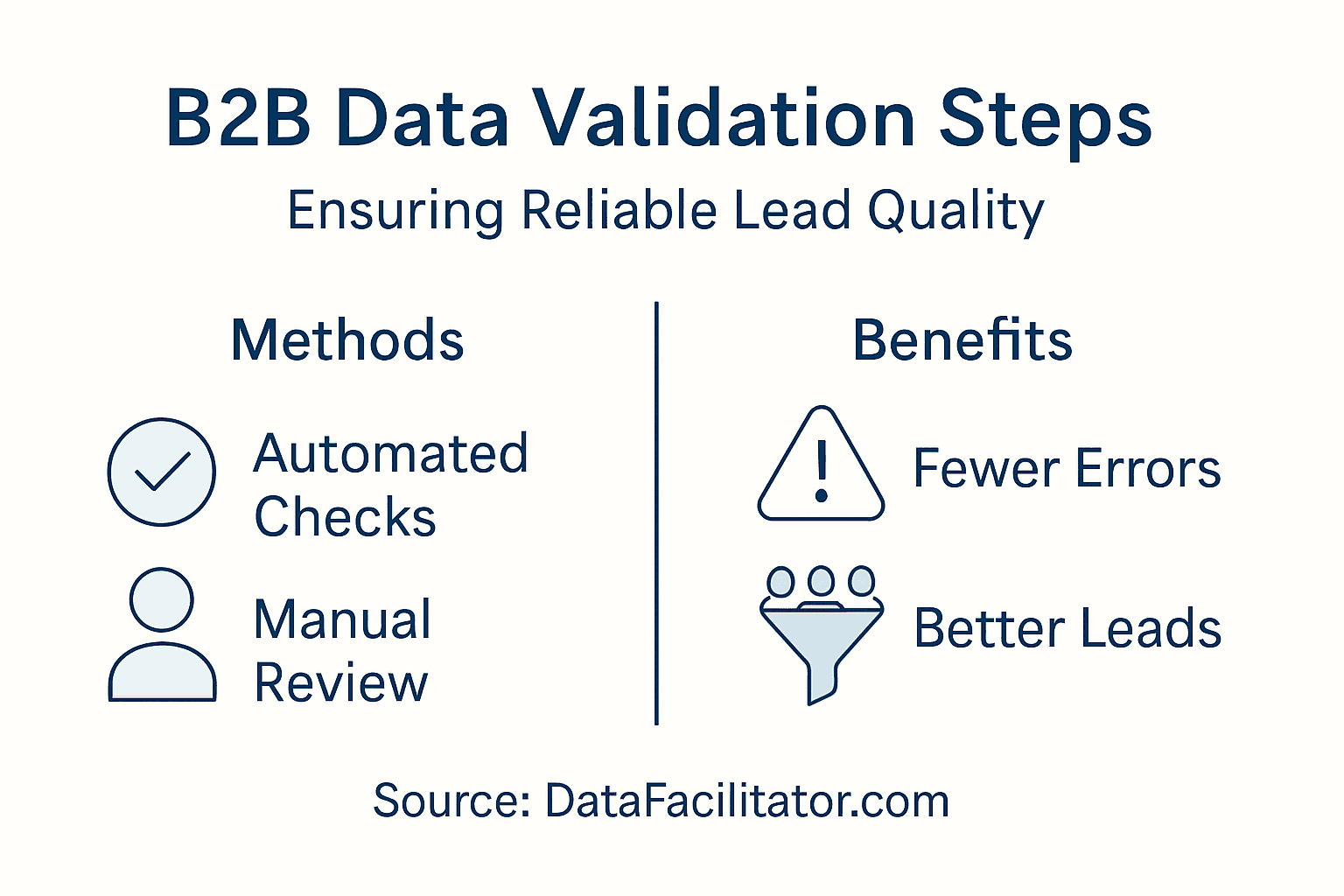
Comprehensive validation methods typically involve both automated tools and manual review processes. These approaches help businesses detect potential errors, enforce data quality rules, and maintain reliable information for critical business operations.
Implementing effective validation requires a multi-layered strategy that combines technological solutions with strategic oversight. Organizations must develop robust validation frameworks that can dynamically adapt to changing data landscapes and emerging business requirements.
Here’s how different validation methods contribute to overall data quality:
| Validation Method | Main Purpose | Business Impact |
|---|---|---|
| Schema Validation | Ensures structure and standards | Reduces integration errors |
| Consistency Check | Confirms data coherence | Prevents reporting discrepancies |
| Data Type Validation | Verifies correct data formats | Lowers input error rates |
| Range Checking | Confirms values are appropriate | Blocks out-of-scope entries |
| Uniqueness Verification | Eliminates duplicates | Improves outreach effectiveness |
Successful B2B data validation is not a one-time event, but a continuous process of refinement and quality assurance.
Pro Tip: Develop a standardized validation workflow that integrates automated checks with periodic manual review to maximize data accuracy and reliability.
How the Data Validation Process Works
The B2B data validation process is a systematic approach designed to ensure the highest quality of business contact information. Data validation methodology follows a structured sequence of steps that help organizations maintain accurate and reliable datasets.
The comprehensive validation process typically involves four critical stages:
- Rule Definition: Establishing clear validation criteria and standards
- Data Collection: Gathering initial contact and company information
- Validation Checks: Applying automated and manual verification techniques
- Data Correction: Identifying and resolving identified inconsistencies
Each stage plays a crucial role in maintaining data quality and preventing potential errors that could compromise business intelligence. The process begins with creating robust validation rules that outline specific requirements for data accuracy, format, and completeness.
Effective data validation is not about eliminating all imperfections, but about creating a reliable framework for continuous data improvement.
Key validation techniques include:
- Automated syntax checking
- Cross-reference verification
- Format and pattern matching
- Duplicate detection
- Contextual relevance assessment
Organizations must approach data validation as an ongoing process, continuously refining their methodologies to adapt to changing business landscapes and emerging data challenges. The goal is to create a dynamic system that not only identifies errors but also provides insights for future data collection and management strategies.

Pro Tip: Implement a cyclical validation process that combines automated tools with periodic manual review to maintain optimal data quality and reliability.
Why Data Compliance Is Critical in 2026
In the evolving landscape of digital business, data compliance frameworks have become a fundamental requirement for organizations seeking to maintain competitive advantage and legal integrity. The regulatory environment in 2026 demands unprecedented levels of accountability and transparency in data management.
Key compliance imperatives for businesses include:
- Adhering to global data protection regulations
- Maintaining rigorous data privacy standards
- Implementing robust security protocols
- Protecting sensitive corporate and client information
- Demonstrating clear data governance mechanisms
Data security compliance has transformed from a technical requirement to a strategic business necessity. Organizations now recognize that effective data management is not just about avoiding penalties, but about building trust and creating sustainable competitive advantages.
Compliance is no longer an optional strategy, but a critical business imperative that directly impacts organizational reputation and operational effectiveness.
The most significant compliance challenges in 2026 revolve around navigating complex regulatory landscapes, protecting individual privacy rights, and ensuring data is collected, processed, and stored with the highest ethical standards. Companies must develop agile compliance frameworks that can adapt to rapidly changing global regulations while maintaining operational efficiency.
Pro Tip: Invest in comprehensive compliance training and develop a proactive data governance strategy that anticipates regulatory changes before they become mandatory.
Risks of Poor Data and Common Pitfalls
Poor data quality represents a significant threat to organizational performance, potentially causing millions in financial losses and strategic missteps. Businesses that fail to implement rigorous data validation processes expose themselves to substantial operational and reputational risks.
The most critical risks associated with poor data include:
- Misguided strategic decisions
- Operational inefficiencies
- Financial losses
- Compromised customer trust
- Potential legal and compliance violations
Open research data risks extend beyond immediate financial implications, potentially undermining organizational credibility and long-term business objectives. Inaccurate data can lead to analytical mistakes, misinterpretation, and ethical breaches that erode stakeholder confidence.
Unchecked data quality issues can transform minor errors into catastrophic organizational challenges.
Specific data-related pitfalls that businesses must proactively address include:
- Incomplete contact information
- Outdated demographic details
- Inconsistent data formatting
- Duplicate record management
- Unverified source credibility
Companies must develop comprehensive data governance frameworks that continuously monitor, validate, and refresh their information repositories to mitigate these inherent risks.
This table summarizes frequent data risks and how strong validation helps prevent them:
| Risk Type | Potential Impact | How Validation Mitigates |
|---|---|---|
| Inaccurate Contacts | Wasted marketing efforts | Catches errors before outreach |
| Duplicated Records | Skewed analytics | Flags and merges duplicates |
| Outdated Information | Missed opportunities | Schedules regular updates |
| Formatting Issues | Integration failures | Enforces input standards |
| Unverified Sources | Compliance violations | Requires source confirmation |
Pro Tip: Establish a dedicated data quality team responsible for periodic audits and implementing automated validation protocols to minimize potential data-related vulnerabilities.
Practical Solutions for Reliable Lead Data
B2B lead data enrichment represents a strategic approach to transforming raw contact information into actionable sales intelligence. Organizations can significantly improve their lead quality by implementing comprehensive data verification and enhancement techniques.
Key practical solutions for reliable lead data include:
- Verifying contact details through multiple sources
- Integrating third-party data validation platforms
- Implementing real-time data enrichment tools
- Conducting regular data hygiene checks
- Cross-referencing information across different databases
Advanced lead research tools enable businesses to streamline their data acquisition and validation processes. These sophisticated platforms automate complex verification workflows, providing instantaneous insights into prospect credibility and potential.
Effective lead data solutions transform raw information into strategic business intelligence.
The most successful approaches combine automated verification with strategic human oversight, ensuring that:
- Data accuracy remains consistently high
- Irrelevant or outdated information gets filtered
- Emerging market signals are quickly incorporated
- Compliance requirements are continuously met
- Data collection remains adaptable to changing business needs
Pro Tip: Create a systematic data validation schedule that includes monthly automated checks and quarterly comprehensive data audits to maintain optimal lead quality.
Unlock Reliable Lead Quality with Expert B2B Data Validation
Ensuring high-quality B2B data is essential to avoid costly outreach mistakes and build strong customer connections. This article highlights the challenge of maintaining accurate, compliant, and up-to-date contact information through thorough data validation and verification processes. If you struggle with inconsistent data, outdated records, or duplicated leads holding back your sales and marketing efforts, the key lies in a trusted data partner that delivers precision and transparency.
At DataFacilitator.com we understand these pain points and specialize in supplying scalable, highly targeted, and verified B2B contact lists tailored to your specific country, region, or niche. Our unique pay-per-result model ensures you only pay for actual leads delivered and our ongoing data validation through transparent screen recordings helps safeguard your outreach success. See how our commitment to data quality and compliance aligns perfectly with the modern standards discussed in this piece.
Explore our carefully curated solutions in We handle the leads, you close the deals. – DataFacilitator to discover actionable datasets that eliminate outdated and duplicated information.
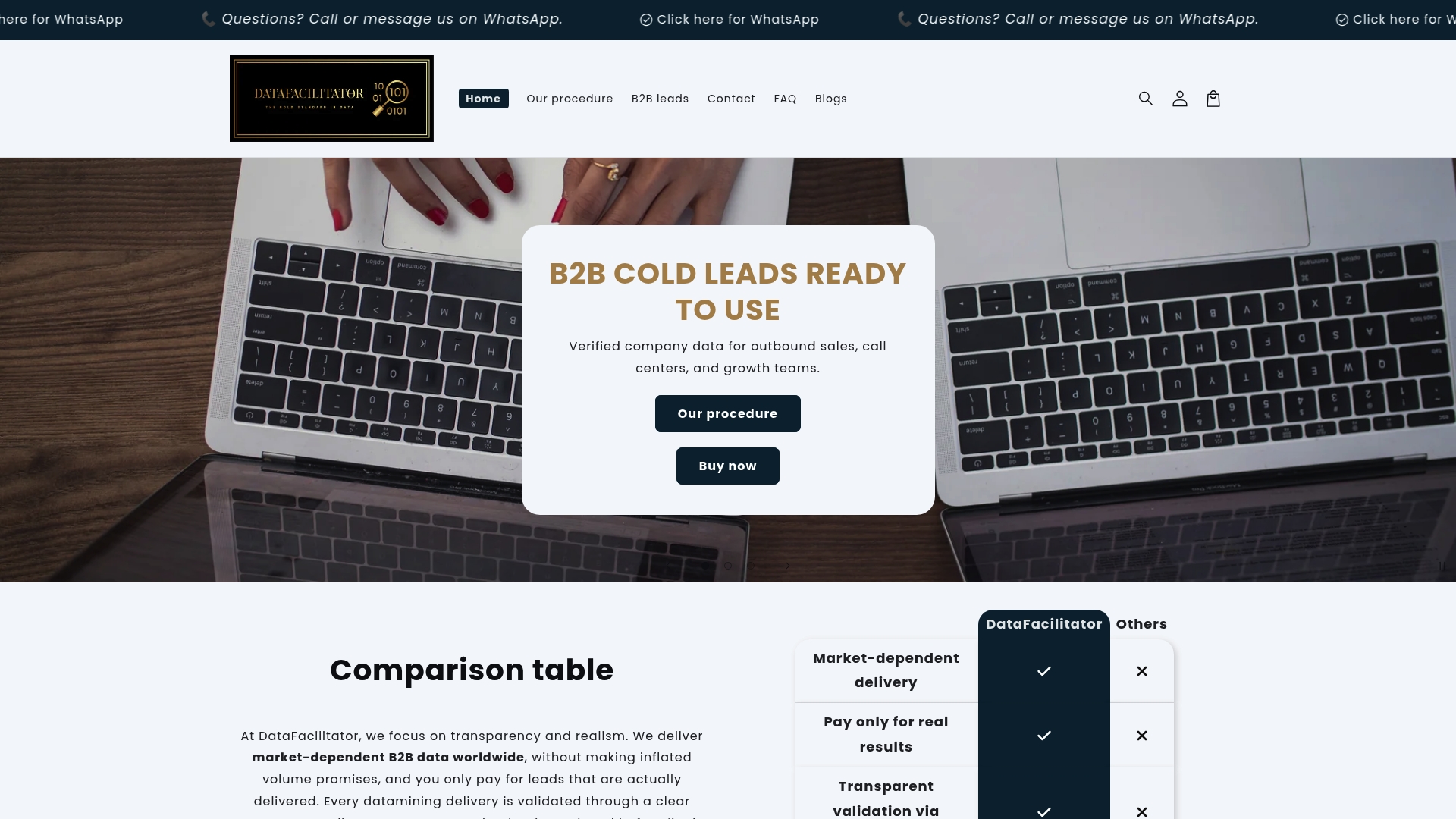
Don’t let poor data quality stall your growth. Start leveraging verified, compliant, and actionable B2B leads today by visiting DataFacilitator’s frontpage. Take control of your outbound sales with data that works as hard as you do. Visit https://datafacilitator.com now and empower your team with data they can trust.
Frequently Asked Questions
What is B2B data validation?
B2B data validation is the process of ensuring the accuracy, reliability, and usability of business contact information, which involves comprehensive checks to maintain data integrity across organizational systems.
Why is data validation important for lead quality?
Data validation is crucial for lead quality as it helps prevent inefficient outreach, minimizes errors in decision-making, and ensures that organizations have accurate and up-to-date information to work with.
What are common techniques used in data validation?
Common techniques include format validation, range checking, consistency analysis, cross-referencing multiple data sources, and automated error detection to ensure high-quality data.
How can organizations maintain effective data quality?
Organizations can maintain effective data quality by implementing continuous validation strategies, utilizing both automated tools and manual reviews, scheduling regular audits, and ensuring adherence to compliance standards.