


Bold decisions in B2B sales depend on more than just collecting data. For teams in The Netherlands striving to build smarter outbound lead generation strategies, the sheer pace of digital change demands a fresh approach. Strategic data interpretation now sets leading organizations apart, as new regulations and advancing technologies reshape competitive advantages. This article unpacks the most important B2B data trends for 2026, helping professionals prepare for evolving market realities and sharpen their outbound strategies.
Table of Contents
- B2B Data Trends Defined and Debunked
- AI Personalization and Predictive Analytics
- First-Party Data and Privacy Regulations
- Data Quality and Governance Standards
- Sales Enablement in a Cookieless Landscape
- Risks, Pitfalls, and Compliance Challenges
Key Takeaways
| Point | Details |
|---|---|
| AI and Predictive Analytics Integration | Advancements in AI are enabling B2B sales teams to enhance personalization and predictive capabilities, driving better customer insights and increased conversion rates. |
| Importance of First-Party Data | Adhering to privacy regulations is essential; first-party data is becoming a strategic asset that enhances customer trust and compliance. |
| Effective Data Governance | Implementing structured data governance frameworks is crucial for ensuring data quality, compliance, and informed decision-making within sales organizations. |
| Navigating a Cookieless Environment | Sales strategies must shift towards first-party data and contextual engagement methods, while emphasizing consent-driven customer relationships. |
B2B Data Trends Defined and Debunked
The B2B data landscape is rapidly transforming, driven by technological innovations and changing market dynamics. Digital technologies are reshaping business operations across multiple sectors, introducing complex challenges and unprecedented opportunities for sales teams.
Key developments in B2B data trends for 2026 include several critical transformations:
- Artificial Intelligence (AI) integration for predictive analytics
- Increased emphasis on data privacy and compliance
- Real-time data verification and validation techniques
- Advanced segmentation and targeting capabilities
- Enhanced data enrichment methodologies
Companies are now recognizing that raw data alone is insufficient. Strategic data interpretation has become the primary differentiator for successful B2B sales strategies. Modern sales teams require sophisticated approaches that go beyond traditional data collection, focusing instead on intelligent, context-aware insights.
Effective B2B data strategies in 2026 will prioritize quality over quantity, emphasizing precise, actionable intelligence.
The digital transformation is driving significant changes in how organizations approach data. Marketing budgets are increasingly allocated toward digital content and AI tools, reflecting a strategic shift towards more intelligent, data-driven decision-making processes.
Here’s a summary of how major B2B data trends are reshaping sales approaches in 2026:
| Trend | New Capability Introduced | Business Impact |
|---|---|---|
| AI & Predictive Analytics | Advanced personalization | Higher conversion rates |
| First-Party Data Focus | Improved data compliance | Greater customer trust |
| Data Governance | Structured data management | Reduced errors and redundancies |
| Cookieless Enablement | Contextual, consent-driven engagement | Stronger, privacy-first relationships |
| Risk & Compliance Focus | Proactive risk mitigation | Increased regulatory resilience |
Pro tip: Invest in continuous data skills training for your sales team to stay ahead of emerging technological trends and maintain competitive edge.
AI Personalization and Predictive Analytics
Artificial Intelligence is revolutionizing B2B sales strategies through advanced personalization and predictive capabilities. AI technologies are transforming sales effectiveness by enabling more intelligent, data-driven decision-making processes across complex sales environments.
Key AI-powered personalization strategies include:
- Hyper-targeted lead scoring and prioritization
- Dynamic customer journey mapping
- Intelligent content recommendation engines
- Predictive customer behavior modeling
- Automated sales interaction optimization
Predictive analytics represents a quantum leap in sales intelligence, allowing teams to move beyond reactive approaches. By leveraging machine learning algorithms, sales professionals can now anticipate customer needs, identify potential opportunities, and develop highly customized engagement strategies before traditional methods would even recognize emerging patterns.
AI-driven personalization enables sales teams to transform raw data into actionable, strategic insights that dramatically improve conversion potential.
The integration of AI technologies requires a sophisticated approach. Sales teams must develop robust data infrastructures, invest in continuous learning programs, and cultivate a culture of technological adaptability to fully leverage these advanced analytical capabilities.
Pro tip: Develop cross-functional training programs that help your sales team understand AI tools and interpret complex predictive analytics effectively.
First-Party Data and Privacy Regulations
The evolving landscape of data privacy is fundamentally reshaping how B2B sales teams collect, manage, and utilize customer information. European data protection guidelines are establishing increasingly stringent standards for first-party data management, compelling organizations to adopt more transparent and ethical data practices.
Critical components of first-party data compliance include:
- Explicit consent mechanisms
- Transparent data collection processes
- Comprehensive privacy policy documentation
- Robust data security infrastructure
- Clear opt-out and data deletion pathways
First-party data represents the most valuable and legally defensible information source for sales teams. By directly collecting data through owned channels like websites, customer interactions, and direct communications, organizations can build more reliable and legally compliant data repositories that minimize regulatory risks.
Privacy regulations are transforming first-party data from a commodity into a strategic asset that requires careful, ethical management.
Sales teams must recognize that compliance is not just a legal requirement but a competitive advantage. Companies that demonstrate robust data protection practices build trust, differentiate themselves in the market, and create more meaningful, consent-based customer relationships.

Pro tip: Implement a comprehensive data governance framework that centralizes consent management and ensures consistent privacy compliance across all organizational touchpoints.
Data Quality and Governance Standards
Data governance has emerged as a critical strategic imperative for B2B sales organizations seeking to maximize their competitive potential. Comprehensive data governance frameworks are transforming how companies manage, secure, and leverage their most valuable information assets.
Essential components of robust data governance include:
- Clear organizational data ownership structures
- Standardized data collection and validation protocols
- Automated compliance and quality monitoring systems
- Comprehensive access control mechanisms
- Regular data auditing and performance tracking
Data quality management represents a sophisticated approach to ensuring information reliability and operational effectiveness. By implementing stringent governance standards, organizations can create a structured ecosystem that minimizes errors, reduces redundancy, and enables more informed decision-making across sales and marketing functions.
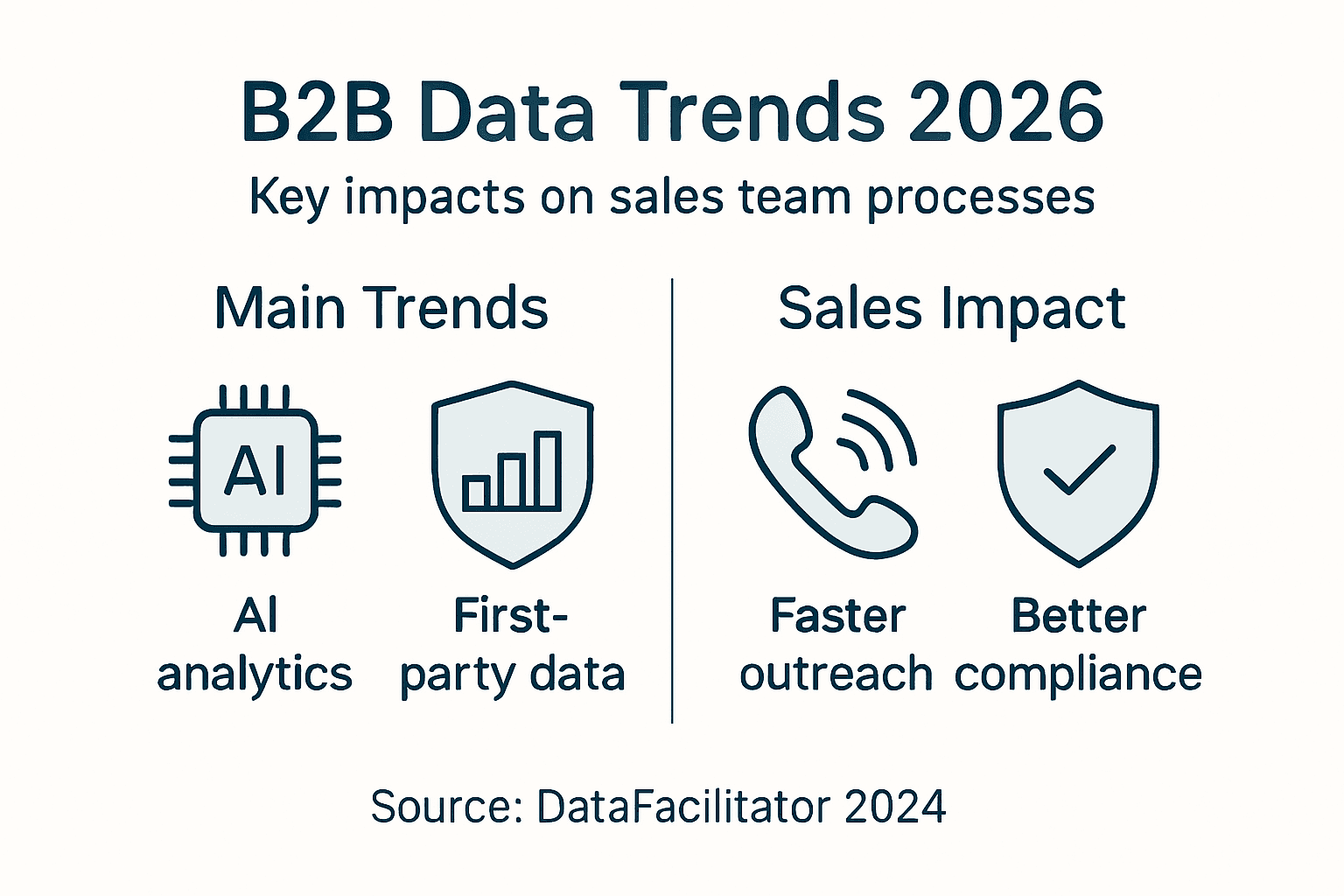
Compare these critical data governance standards to understand their role in modern B2B organizations:
| Governance Standard | Description | Operational Benefit |
|---|---|---|
| Data Ownership Structures | Defined roles for data assets | Accountability and clear oversight |
| Validation Protocols | Rules for data collection quality | Fewer inconsistencies and errors |
| Compliance Automation | Tech solutions for monitoring | Reduced manual work, timely alerts |
Effective data governance transforms raw information into a strategic organizational asset with measurable business value.
Sales teams must recognize that data governance is not merely a technical exercise but a holistic strategy requiring cross-functional collaboration. Successful implementation demands ongoing commitment, continuous learning, and adaptive policies that evolve with technological and regulatory landscapes.
Pro tip: Establish a dedicated data governance committee that includes representatives from sales, marketing, IT, and compliance to ensure comprehensive and integrated policy development.
Sales Enablement in a Cookieless Landscape
The decline of third-party cookies is fundamentally transforming B2B sales strategies, compelling organizations to reimagine their approach to customer engagement. B2B SaaS companies are adapting to privacy-focused targeting methods that prioritize first-party data and contextual intelligence.
Key strategies for sales enablement in a cookieless environment include:
- Leveraging first-party data collection mechanisms
- Developing robust contextual targeting approaches
- Implementing advanced consent management platforms
- Creating personalized content experiences
- Utilizing AI-powered predictive analytics
Sales intelligence has become increasingly sophisticated, moving beyond traditional tracking to create more meaningful, permission-based customer interactions. Organizations must develop nuanced approaches that respect user privacy while delivering targeted, relevant engagement.
The cookieless landscape demands a strategic shift from passive tracking to active, consent-driven relationship building.
Successful sales teams will distinguish themselves by their ability to generate insights through direct interactions, advanced analytics, and transparent data practices. This requires investment in technology, training, and a fundamental reimagining of customer engagement strategies.
Pro tip: Develop a comprehensive first-party data collection strategy that provides clear value exchange and builds trust with potential customers.
Risks, Pitfalls, and Compliance Challenges
The B2B data landscape is becoming increasingly complex, with global compliance concerns escalating dramatically in 2026. Organizations face unprecedented challenges in navigating intricate regulatory environments that demand sophisticated risk management strategies.
Primary compliance risks and potential pitfalls include:
- Inadequate data consent mechanisms
- Insufficient privacy policy documentation
- Lack of transparent data handling practices
- Incomplete data breach response protocols
- Neglecting cross-border regulatory variations
Regulatory compliance has transformed from a background administrative function to a critical strategic imperative. Sales teams must recognize that non-compliance is not just a legal risk but a fundamental threat to organizational reputation and customer trust.
Compliance is no longer a checkbox exercise, but a comprehensive approach to ethical data management and customer relationship building.
The most successful organizations will develop proactive, adaptive compliance frameworks that integrate technological solutions with robust governance models. This requires continuous education, advanced technological infrastructure, and a culture of transparency and accountability.
Pro tip: Conduct quarterly comprehensive compliance audits that map your data practices against evolving global privacy regulations and technological standards.
Unlock the Full Potential of B2B Sales Data in 2026
Navigating the evolving B2B data landscape demands access to high-quality, compliant, and verified lead data that empowers your sales teams to leverage AI-driven personalization, first-party data compliance, and advanced governance. This article highlights the challenges many sales teams face such as data accuracy issues, privacy regulation compliance, and the urgent need for actionable insights. Your efforts depend on reliable data to fuel predictive analytics and create targeted outreach strategies that transform cold leads into loyal customers.
At DataFacilitator, we specialize in delivering precisely that. Our platform offers scalable, targeted, and legally compliant B2B contact lists tailored by industry, region, and niche. We put transparency first by validating all data through screen recordings before delivery and follow a pay-per-result model ensuring you only pay for verified leads. Find out how you can focus on closing deals by letting us handle the leads with our B2B Leads Collection designed specifically for marketers and sales pros who demand data they can trust.
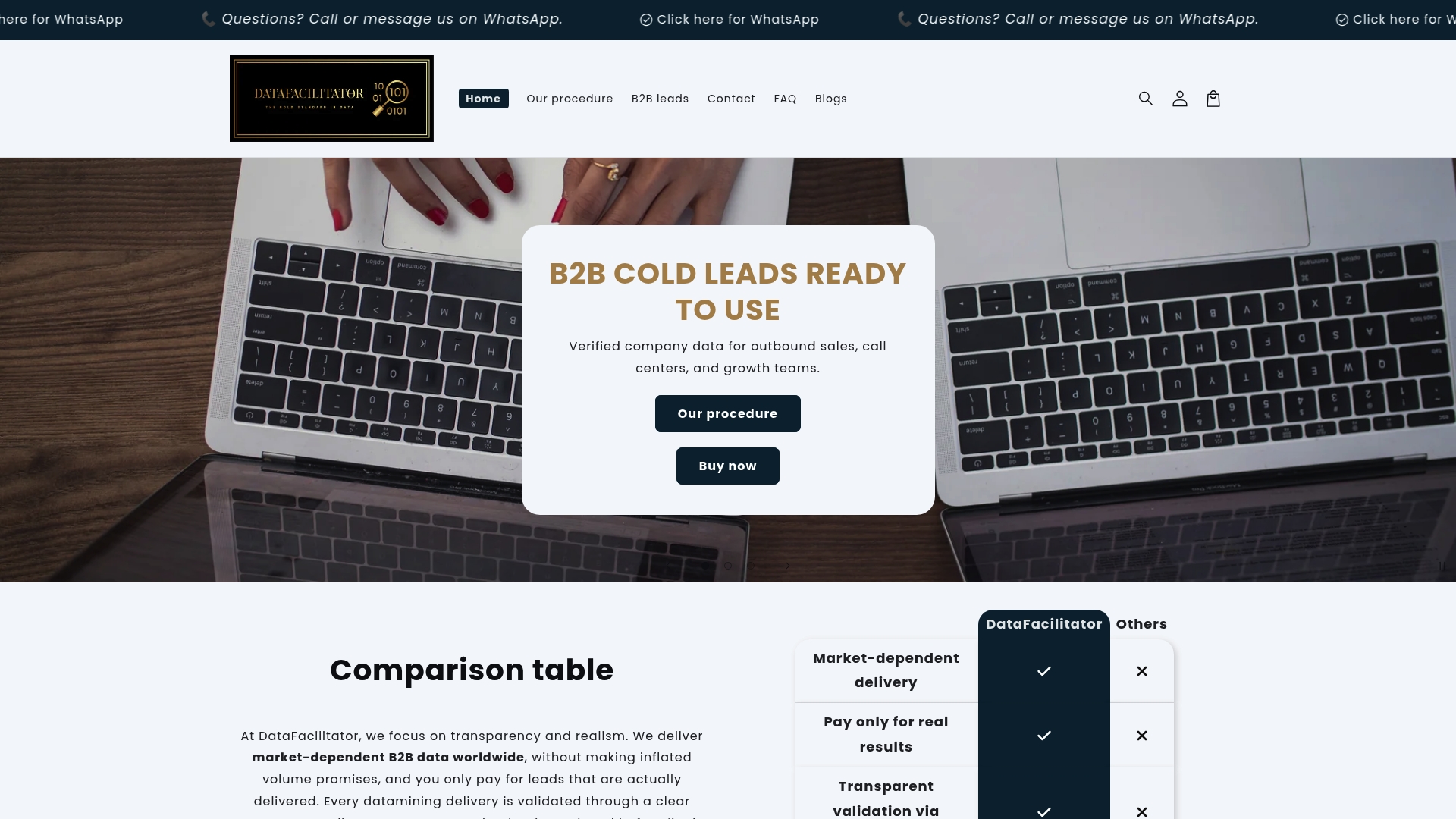
Take control of your 2026 sales outcomes by partnering with a trusted data provider that values compliance and accuracy as much as you do. Explore our offerings today at DataFacilitator or browse all solutions on our frontpage to start converting more prospects with precision and confidence.
Frequently Asked Questions
What are the key B2B data trends impacting sales teams in 2026?
Key B2B data trends for 2026 include the integration of artificial intelligence for predictive analytics, an emphasis on data privacy and compliance, real-time data verification, advanced segmentation capabilities, and enhanced data enrichment methodologies.
How does AI influence B2B sales strategies?
AI enhances B2B sales strategies by enabling advanced personalization, predictive analytics, and intelligent content recommendations, allowing sales teams to anticipate customer needs and tailor their engagement strategies effectively.
Why is first-party data important for B2B sales teams?
First-party data is crucial because it provides reliable, legally compliant insights directly from customers. It minimizes regulatory risks and helps build trust through transparent data collection practices.
What role does data governance play in B2B sales?
Data governance is vital for ensuring data quality and compliance. It establishes structured protocols for data management, enhances accountability, reduces errors, and facilitates informed decision-making, ultimately maximizing competitive advantage.